

Portraying Life – Manet, Bellows & Unexpected Joy

Manet,_Edouard_-_Le_Déjeuner_sur_l'Herbe_(The_Picnic)_(1)


Lunch on the Grass

Manet, Bellows and the surprising pleasure of the unknown

We were thrilled to attend a ‘friends and family’ private showing event at the Royal Academy of Arts in London last week.  It’s a superb building, Burlington House, close to Piccadilly Circus and Green Park, and the RA brings together some wonderful exhibitions.

Manet (1832–1883)

Somewhere along the line, many people will have heard of and seen French artist Édouard Manet’s famous painting ‘Le Dejeuner sur l’herbe’, or Luncheon on the Grass, even if you’re not an art afficionado. It’s a large oil painting which resides in a museum in Paris, with a smaller version in the Courtauld gallery in London, currently on show at the RA. It created a scandal when it was first aired in 1862, largely because of the female nude and the scantily clad bather, alongside two fully clad gentlemen, and a subtext which implied all kinds of (at the time) illegal, immoral and impossible things going on, but also because of Manet’s style of painting which led to him being described as ‘The Man Who Invented Modern Art’.

Manet,_Edouard_-_Le_Déjeuner_sur_l'Herbe_(The_Picnic)_(1)

The Luncheon on the Grass 1862-63

Manet once said, he ‘felt like a man who knows his surest plan to learn to swim safely is, dangerous as it may seem, to throw himself into the water’.

Berthe Morisot With a Bouquet of Violets 1872

Berthe Morisot With a Bouquet of Violets 1872

It was fascinating to see these famous and important works on display, to get up close and examine the way the paint had been applied, the ‘unfinished’ look of some, with evident brushstrokes,  the colours, the talent and flair, and also the expression of Manet’s life unfolding through his paintings. Because Manet often painted his friends and family, not only models and sitters, and he included contemporary figures such as novelist Emile Zola, poets Baudelaire and Mallarmé, Antonin Proust, and fellow artist Berthe Morisot, whose face is perhaps one of the most well-known amongst his many portraits, so there is a relevance, involvement and intimacy which is charming.

Manet’s artistic development straddled the time between the formal painted portrait as the main form of rendering one’s likeness in a lasting form, and the rapidly developing age of photography and daguerreotypes and their more immediate and realistic representation.

My sense of Manet’s work is that he brought an informality and naturalness to his portraits of people and their lives, and their interweaving with his own life, with a casualness that was daring for its time, yet retained startling realism and depiction of his subjects.

The Railway 1873

The Railway 1873

Some of the perspectives and uses of light and shade, and of so many hues of black, especially those I observed in ‘The Railway’, are stunning, and Manet rightly deserves his accolades as an inventor, if not The Inventor of Modern Art.

Some have said these paintings are not the best of his work, and there may be some gems missing from this exhibit; however for me it demonstrates his acute observations and his sympathetic and daring statements capturing life through his eyes and hands.

George Bellows (1882 – 1925)

In contrast, I had not previously encountered artist George Bellows. My loss, as I found his work most engaging and exciting. Bellows was a gifted artist who found success and fame early in life. He has been described as “one of the most innovative and versatile artists of his time”.  In 1913, at the age of 30, he became the youngest ever artist to be elected an Associate of the National Academy of Design.

His exhibit depicts Modern American Life, and as his career coincided with the industrialisation of the USA, he witnessed the rapid growth of New York, which became a frequent subject for his work.

George Bellows, Stag at Sharkey's, 1909

George Bellows, Stag at Sharkey’s, 1909
Photograph: George Bellows/The Cleveland Museum of Art, Hinman B Hurlbut Collection

His early work concentrates on boxing matches, some very gritty and earthy scenes which exude a raw power and the almost animalistic movements and postures of the boxers are visceral, you can almost smell them.

There is a vigour and life in his work which captures early 20th century America with great precision and power, the scenes of New York very much reminding me of films about gang life, and there are also many touching works illustrating the poverty and grim hardships encountered by immigrants and the underprivileged.

Bellows’ war paintings are also powerful, showing scenes from the First World War in varying forms from huge oil paintings to lithographs. They are quite disturbing in their violence and stark reality. As Bellows did not witness WWI at first hand, they were interpreted from The Bryce Report which had recounted eye witness accounts of atrocities perpetrated by the German army on Belgian citizens.

In contrast, in terms of subjects, his later works have many vibrant and invigorating cityscapes, seascapes and landscapes and scenes of winter revelry and snow which are exquisite. I was very taken with ‘Easter Snow’ and also ‘Love of Winter’, so full of life and exuberance and colour.

George Bellows, Love of Winter, 1914 Photograph: George Bellows/The Art Institute of Chicago, Friends of American Art Collection

George Bellows, Love of Winter, 1914
Photograph: George Bellows/The Art Institute of Chicago, Friends of American Art Collection

George Bellows, Easter Snow, 1915

George Bellows, Easter Snow, 1915
Photograph: Private Collection

Together with the numerous portraits of women, many of his wife, Emma, and his family, which are very tender and beautifully rendered, there is a wide scope and huge talent on display, and it was an unexpected, unanticipated joy to discover George Bellows and his thought-provoking work.

Highly recommended ****

The Manet Exhibit continues until 14th April, George Bellows until 9th June 2013.

Discover more at  Royal Academy of Arts


Tom Evans’ Soulwave – short, thought provoking read

soulwaveKindle


A Short Novel With a Fast Pace and A Wake-up Call For Us All

Christine Miller

tombulb1_r_cc_reasonably_smallSoulwave is a short story about a possible fascinating future, which is designed to whet the appetite for Tom’s expanded and expanding visionary work in progress, and it certainly does just that.

The self-contained story is well-researched, fantastical and compelling, woven through with hints of possible plot twists, and gives just enough hints about the characters to encourage anticipation of what is yet to come.

And it just could be a future that is waiting to happen, hidden in plain view. Mind-opening and thought provoking.
Currently FREE on Kindle and I Tunes.
Highly Recommended.

Author’s Description

At only 7000 words long, you can read the whole book in a single commute on your iPhone or Kindle.

Soulwave tells of a fictional account of a possible near-future for the Earth and humanity. It is a sober reminder of how life on this planet is special and to be treasured.

It tells of a world where the ice caps have melted, the population has renormalised and of the cosmic joke to end all cosmic jokes – as far as humanity is concerned.

It’s written to inspire people to look up in wonder and amazement and to treat every day as if it is your last. We are only here and alive by the slimmest of chances and margins. This we must be eternally grateful for.

Soulwave is a future-history – that is something that might just happen It has happened to the Earth in the past and will undoubtedly happen again – we just can’t say when. It makes any fears about global warming seem trivial.

Although the message seems terminal, the story is really about how life propagates around the Universe that we are just one small part of. It will make you realise that we are only alive on this planet at this time by the slimmest of coincidences. Our planet and solar system are very special and we should cherish them and look after them.

soulwaveKindleSoulwave

Author: Tom Evans
Website: Tom Evans
Kindle: Soulwave
ITunes: Soulwave


One Step Too Far – Tina Seskis Book Review

TinaSeskiscover27733-small


TinaSeskiscover27733-small

A Truly Compelling Read

Christine Miller 

“The heat is like another person to push past as I make my way along the platform. I board the train although I don’t know whether I should, after all.
I sit tense amongst the commuters, moving with the carriage and the crowds from my old life into my new one.”

Tina Seskis’ forthcoming book absorbed me right from the beginning. Beautifully written and well-paced, it has an endearing, fascinating and realistic set of characters, many of whom we might recognize from our own lives, with a sense of mystery, sadness, joy and anticipation. The story is powerfully told, descriptive and vivid, with twists and turns which kept me reading, intrigued, until the early hours. And I didn’t see the very clever ‘shocker’ coming at all: a must-read and destined for great success.
Highly recommended 5* at least!

Publisher’s Description:

The book EVERYONE’S going to be talking about this summer – extract to be featured in The Independent soon.

An apparently happy marriage.  A beautiful son.  A lovely home.  So what makes Emily Coleman get up one morning and walk right out of her life to start all over again?  Has she had a breakdown?  Was it to escape her dysfunctional family – especially her flawed twin sister Caroline who always seemed to hate her?  And what is the date that looms, threatening to force her to confront her past?  No-one has ever guessed her secret.  Will you?

Tina SeskisOne Step Too Far

Is running away ever the answer?
Author:
Tina Seskis
Buy on Amazon: UK       USA
Website: http://tinaseskis.com/
Publisher: Kirk Parolles
Pub Date: Apr 15 2013

A Very British Blog Tour

Great Brit Blog Tour

Welcome to
A VERY BRITISH BLOG TOUR  - 2013

A collection of blogs, books and authors who are surprisingly very British

Great Brit Blog TourChristine Miller invites you to take part in ‘A Very British Blog Tour’ by visiting and supporting the websites of authors involved in the tour and who are dedicated to turning out some of the finest books available in Britain today. Authors Paul Anthony and Clive Eaton invited me, together with a hand picked group of British authors, to take part in this great initiative.

Each author named at the bottom of the page has asked been asked the same questions, but the answers will obviously all be different. You simply click on the author’s name below to see how they have answered the same question.

By the way, we British have certain conventions, traditions and procedures that are expected. There is a dress code in the reading of this British blog and you are expected to comply with it.

For example…

Lancaster House Christine Miller

Now then, let us proceed in an orderly fashion. As you know, we are all very boring and staid in Britain, aren’t we?

Well, there’s a myth about the British and your starter for ten is – stuffy, class conscious, boring, staid! But is this still relevant in today’s world?  Let’s find out from our wonderful writers what they feel about it.

So, without further ado, here are the questions and answers from

THE VERY BRITISH WRITER:  Christine Miller

Q. Where were you born and where do you live at the moment?

Alfie in the sunA. I was born just outside Preston, Lancashire, UK. Preston is a city now, but it was just a town when I was a gal. I have very happy memories of walks in the countryside, birdspotting, celandines, lily of the valley, cowpats, trips to the seaside, to the beautiful Trough of Bowland in the Pennines, to the Lake District, and to North Wales.

I now live in West London, with my family and one Bengal cat named Alfie, who we rescued. Of course he is now in charge of most things…

Q. Have you always lived and worked in Britain or are you based elsewhere at the moment?

A. I have lived in France, The Netherlands, Greece, Denmark, Norway and Australia, not necessarily in that order. One of my children was born in Denmark, and one was just 14 weeks old when we moved to Australia. Whilst I am currently based in London, with the ease of connection through the internet, I feel myself to be a global citizen with friends, colleagues and contacts almost instantly available all over the world. When I first lived in Oz we used to have to book phone calls, and there was an irritating and disconcerting time lag. Now with Skype, I can be in touch when the mood and desire take me!

Orbit towerQ. Which is your favourite part of Britain?

A. I love the Cotswolds, Dorset Heritage Coast, especially Lyme Regis and Bridport, The Lake District, and Scotland. I still love the Fylde coast where I grew up,  and I am immensely proud of London. I think it is a wonderful city, and the way Great Britain pulled off the 2012 Olympic Games was truly amazing, it was a privilege to be part of it.

Q. Have you ‘highlighted’ or ‘showcased’ any particular part of Britain in your books? For example, a town or city; a county, a monument or some well-known place or event?

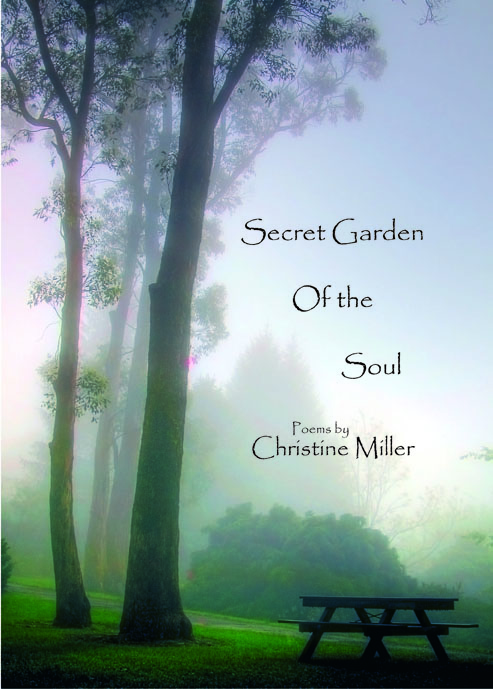
A. Yes.  Lyme Regis in Dorset, in several poems in my book Secret Garden of the Soul; London Underground, in particular Ravenscourt Park Station on the District Line in another poem called ‘The Slow Train’London Snow where I live, The Thames at Marlow, Buckinghamshire, in a poem called ‘Sea of Mind’. Also  another poem written about the garden of a friend’s house where I write deep in the West countryside, The Goddess Tree and one from France called Vines. Probably more, but that’s more than enough for now.

Q. There is an illusion – or myth if you wish – about British people that I would like you to discuss. Many see the ‘Brits’ as ‘stiff upper lip’. Is that correct?

A. No, not in my experience. It may have been true to some extent in earlier times, such as the reign of Queen Victoria, or during WWII for example, when people were dealing with external challenges and deprivation, and were in danger – and adopted a stoic, let’s-get-on-with-it approach. We don’t have the expressive, emotional nature of other races with more fiery temperaments, perhaps, but we are full blooded and passionate in our own way. Also,  these days, being British is about a broader, multicultural heritage and way of living – I think we have opened up in many ways because we are now a melting pot of many races, cultures and creeds.

Just look at things like football crowds and how we responded to hosting the Olympics; if you had the chance to be at the Olympic Park you’ll know that the atmosphere was just amazing, the volunteers were brilliant, and I think it also came across on television that there was real happiness in the air, and such jubilation when we did well.

800px-Meissen-teacup_pinkrose01Also, the exuberance of events such as Royal Weddings and the Queen’s Jubilee – we do it with such style and turn out in our thousands.  All those people lining the Thames in pouring rain in June, waving flags and cheering, and hosting celebrations all around the country – they might have been ‘stiff upper lipped’ in terms of enduring horrible weather, but they were spirited and joyful in their appreciation for the occasion.

I do think we have that characteristic of drinking tea…(with or without the extended little finger!) but we also love coffee, and of course we still have the reputation for liking warm beer, though chilled white wine is equally popular now, as are cold beers and exotic cocktails.

magician2Q. Do any of the characters in your books carry the ‘stiff upper lip’? Or are they all ‘British Bulldog’ and unique in their own way?

A. Those characters peopling my writing are in possession of a full range of emotional expressions; I would describe them as global souls occupying a unique place in the world. I haven’t yet really ventured into prose fiction in such a way that I can offer a description of my characters, but if I were to imagine, they would be as complex as we all are, and might have national characteristics to support and elaborate the plot.

Q. Tell us about one of your recent books?

RECov solidA. My most recent published book is a non-fiction volume called The Resourceful Entrepreneurs Guide to Business dedicated to the self-employed, entrepreneurs, and independent thinkers such as authors, to help them harness their talents and ambitions into successful ventures through being more resourceful and managing their mind-sets with focus and fulfillment. Innovators and creative people can find it tough to stay on track and translate their ideas into action, and this book is here to help.

I also publish an online magazine portal dedicated to human potential, where I often interview authors – a recent piece is with Wm Paul Young, of The Shack fame, which was a surprise phenomenal best seller with 18 million sales and 50 weeks on the NYT bestsellers list. He gives some interesting insights.

Q. What are you currently working on?

A. I am playing with and creating  several projects – a new volume of poems called Courage to Love, a non-fiction about Love in Organisations, for which I’ve interviewed 60 leaders about love, caring and compassion at work, plus I have two companion editions to Resourceful Entrepreneur’s Guide, on transformation and growth and leadership in the pipeline. And some very juicy interviews coming up.

Q. How do you spend your leisure time?

A. I invest my leisure time in reading, cooking, cinema, dining out, entertaining, theatre, gardening, being in nature and in conversation, and writing, especially poetry,  is a joy to me so I regard that as leisure as well, and I love to travel. In fact, because my work is largely play, I often can’t distinguish between the two, and enjoy a fertile creative playground which is highly productive.

Q. Do you write for a local audience or a global audience?

A. A global audience, geographically. I have a very specific reader in mind though when writing, in terms of audience.

Q. Can you provide links to your work?

A. Yes, I certainly can. I write, edit and publish and offer written, audio and video author interviews for book promotion purposes.

Secret Garden of the Soul
Resourceful Entrepreneur
Guide to Writing Poetry
 (complimentary)
ReSource magazine web portal
Idea Festival
Author Interviews
Video Interview 

inviteI’ve invited the following British, not necessarily British-based, authors to join in the fun. Once they’ve agreed, and set up their own answers on their respective websites/blogs, then clicking on their name will take you there.

Also, if you are a British author and would like to join in, please get in touch via the Contact page or click the link in the invitation opposite.

To see how our other authors responded, click on an author’s name below. They will appear in orange when the links to their answers are live. 

Tom Evans
Kirsty Allison
Tony Buzan
Lubna Gem Arielle
Sarah Arrow
John Logan
Lynn Serafinn
Mark Perl
Anne Fallas
Anthony Russell
Diana Cooper
Nigel Cutts
Mary Curtis
???????


Twitter hashtag: #VBBT2013

Shortlink: http://bit.ly/britblogtour

Love Is – More than rosy moments

Come To Love Christine Miller

heartstone Christine MillerLove Is

I was reflecting this morning that this is the first Valentine’s Day for three years that I haven’t been involved in some kind of poetry competition or promotion – 2010 and 2011, I was working with Hallmark Cards as a judge on a ‘Twittermantic’ project offering a prize for the best short romantic verse, with the winning words being turned into a card. Great fun and we attracted lots of entries both times.

Last year, I was working with QVC, the shopping channel, as resident poet on a Love Letters campaign to help the British public write messages of love to their loved ones – I turned out hundreds of poems in two days, and it was great fun. Each entrant received a beautiful, specially designed card with a personalised verse inside, and the requests came from sons and daughters, parents and friends as well as romantic interests, the long-married and newly established and those hopeful for relationships to develop. There were some deeply moving stories of loss, illness, misfortune – through which Love had triumphed and endured, and it was such a delightfully endearing project.

Although not publicly involved this year, I am,  as well as writing a book about Love in Organisations, deeply engaged in the process of bringing together a new volume of poems called ‘Courage to Love’, and this seems like the ideal time to give you a sneak preview.

This one is called ‘Come to Love’ and seems quite fitting for Valentine’s Day, even if it’s a little alternative. It’s really a statement that hearts and flowers and romance are not the essence of lasting love. We need more of the kind of love that endures and grows, standing up to all kinds of challenges and upsets, just like every aspect of human life. A Love that is present not only between couples and in families, but throughout our lives, including our work, our politics, and the way we engage with nature and the environment – in fact, throughout the planet, even the cosmos.

I like to think of us rising and standing in love, strong and courageous and loyal, collectively, rather than falling in love and being infatuated, on a hormonal high which inevitably recedes and leaves us wondering what we saw in that person in the first place. A Love that simply Is…not always easy, but one we know will endure the ups, downs and broadsides of human life.

I dedicate this poem to Love  - as a way of being and becoming; inclusive, extensive and pervasive, bringing the joy and spirit of human flourishing to us all.

Christine Miller

Happy Valentine’s Day – Loving Every Day, Every Loving Day 

Come To Love Christine Miller

The Secrets of Mastering Time

time flies

Mastery in Time – Christine Miller

time fliesIn our modern world, ‘time’ seems to be at a premium; the majority claim they don’t have enough, and overload is a common complaint. Bombarded with information from multiple sources, many feel that time runs away with and from them, and they can never catch up.

So when I was recently invited by my friend Tom Evans, aka the Bookwright, to attend one of his time-bending workshops, and experiment with expanding, extending and transcending time, my curiosity was piqued.

‘I don’t have time’ could have been my response, ‘I’m far too busy’.

But I know that I can make time for the things I choose to do.

And I also have a policy of not describing myself as busy, because again, I will always find time for the people and activities I love. It might require some dancing around schedules, but it’s possible.

It’s a paradox that time can apparently pass at different rates for two people in the same space performing the same activity.  That brings back memories of schooldays! The one who is fully engaged and enjoying what they are involved in finds time whizzing by rapidly; but if you’re bored and uninterested, time drags slowly by and feels interminable. Same minutes and hours, different outlook, different outcome!

I pondered how we usually only procrastinate about what we are reluctant to do….then thought,
is that true? Do we?

What about those juicy, fulfilling projects that could transform many lives including our own? Do we always press on with those, and finish them off promptly, or does their importance and consequence bring up fears and reluctance because they might just lead to great change and transformation?

Sometimes change, welcome or unwelcome, makes us uncomfortable, so we shelve activities and make excuses in order to stay the same. It’s a bit crazy, really, because we and our world are changing constantly, ceaselessly, evolving with every breath, every action, every thought and feeling, so we might as well just get on with it. Yet still, sometimes, we resist.

We all have a different way of relating to time, and this varies at different times of our lives, the year, the day and the circumstance – obvious, I know, but sometimes we forget what is under our noses or ticking away on our wrists!

I found this poem which captures thoughts about time, expressed beautifully and engraved on a Sundial in a garden:

Time

Is

Too slow for those who wait

Too swift for those who fear

Too long for those who grieve

Too short for those who rejoice

But for those who Love

Time

Is

Eternity

by Henry Van Dyke

sundial-350

More about the poem Yaddo Gardens

Tom’s Time Bending workshop offered us the opportunity to alter our perception of time, to play with the past, present and future, and to understand how we can create shifts in time and space to ensure things happen ‘just in time’. The old saying ‘time flies when you’re enjoying yourself’ certainly applied, as the day flew by, in very pleasant surroundings with a fascinating group of people also exploring a type of time travel – without an obvious tardis, more of a ‘build your own’ time machine approach! And it was time well spent, for sure.

If you want to bend time, and find more time for yourself, Tom has some workshops coming up in the near future – details here.

You might also be interested in reading this article on Transformation 

by Christine Miller